The Low Sulfur Pantry: Your Essential Pillar Guide to Smart Ingredient Swaps for Flavorful Cooking
Think a low sulfur diet means bland food? Think again. Discover creative and flavorful ingredient swaps for kitchen staples like garlic, onion, cheese, and eggs.
The low sulfur pantry: your essential guide to smart ingredient swaps for flavorful cooking
When you first get a list of high-sulfur foods to avoid, it can feel like a punch to the gut. Garlic, onions, broccoli, eggs, cheese... it reads like a list of everything that makes food taste good. I know that feeling of staring into your fridge and thinking, "What on earth am I supposed to eat now?"
But I want you to take a deep breath with me, because this isn't the end of flavor. It's the beginning of a new culinary adventure. We're going to turn this list of "can'ts" into a vibrant palette of "can-haves" that will make your kitchen feel exciting again.
The allium problem: reimagining flavor without garlic and onion
Let's start with the big one: the alliums. Garlic and onions are the foundation of countless cuisines around the world. Losing them feels like trying to build a house without a foundation. It's destabilizing and, frankly, a little scary.
The good news is, we can build a new foundation. It's not about finding a perfect one-to-one replacement, but about understanding the *role* these ingredients play—pungency, sweetness, and savory depth—and finding new ways to create those sensations.
What you're missing: the pungent kick of garlic
That sharp, savory, almost spicy bite that garlic brings is hard to replicate. It blooms in hot oil and infuses entire dishes with its unmistakable aroma. It’s the soul of so many sauces, sautés, and marinades.
The swap: fresh ginger + a pinch of asafoetida (hing)
This is my absolute favorite power couple for replacing garlic. It's a two-part solution that addresses both the aromatic and savory aspects of garlic.
Why it works:
Fresh ginger brings a bright, zesty, and peppery heat that beautifully mimics garlic's aromatic pungency. When you sauté it, it releases a fragrance that fills your kitchen and promises a flavorful meal. It doesn't taste *like* garlic, but it fills the same aromatic space.
Asafoetida, also known as hing, is the secret weapon. This pungent resin, ground into a powder, has a strong sulfuric smell that mellows when cooked into a flavor remarkably similar to sautéed onions and garlic. A tiny pinch is all you need to add that deep, savory, umami note you've been missing. Don't be put off by its smell in the jar; it transforms completely with heat.
How to use them:
Start your dishes just like you would with garlic. Heat your cooking oil over medium heat. Add a teaspoon of finely minced fresh ginger and let it sizzle for about 30 seconds until it's fragrant. Then, add a very small pinch of asafoetida powder (seriously, start with less than 1/8 of a teaspoon) and stir it into the oil for about 10-15 seconds before adding your other ingredients. This process, called "blooming," unlocks its savory potential.
- Use this duo as the base for stir-fries with coconut aminos and lime juice.
- Add it to the start of your soup or stew recipe.
- Mix minced ginger into meatballs or burgers for a zesty kick.
What you're missing: the sweet, aromatic base of onion
Sautéed onion provides a sweet, mellow, and deeply aromatic foundation. It adds bulk, moisture, and a subtle sweetness that balances richer flavors. It’s the starting point for nearly every soup, stew, and sauce.
The swap: fennel + celery
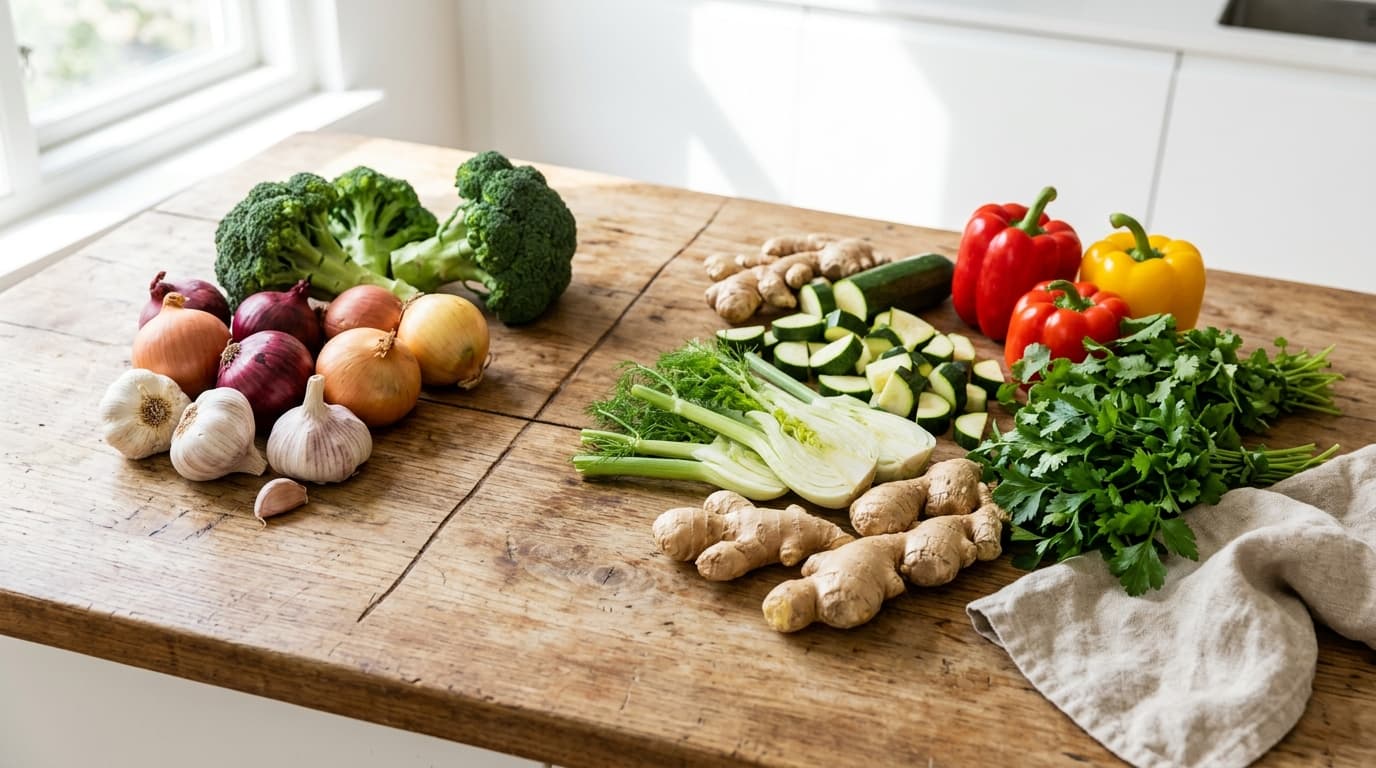
This combination creates a beautifully aromatic and subtly sweet base that will make you forget all about onions. It's a fresh take on the classic mirepoix that’s completely low sulfur friendly.
Why it works:
Fresh fennel is a game-changer. When raw, it has a distinct licorice or anise flavor, but don't let that scare you. When you chop it and sauté it in oil, that flavor completely mellows into a delicate, aromatic sweetness that is shockingly similar to cooked onion. Its texture also softens perfectly, providing the same bulk and body.
Celery provides the savory, slightly salty, vegetal backbone. It holds its texture well and adds a layer of complexity that keeps the fennel from being one-note. Together, they create a balanced, aromatic base that tastes intentional and delicious, not like something is missing.
How to use them:
Use them in a 1:1 ratio to replace onion in any recipe. If a recipe calls for one large onion, use one small fennel bulb (white part only) and two to three celery stalks, all finely diced. Sauté them in olive oil over medium heat until they are soft and translucent, about 8-10 minutes. This is your new starting point.
- Build a soup on this base with carrots, potatoes, and a safe homemade broth.
- Use it as the foundation for a roasted red pepper sauce for pasta.
- Slow-cook it with chicken or fish for a fragrant and moist result.
Rethinking protein: navigating eggs, meat, and dairy
Protein can be a tricky area on a low sulfur diet because the sulfur-containing amino acids, methionine and cysteine, are essential building blocks of protein. This means that many protein-rich foods, especially from animal sources, are naturally higher in sulfur. Let's look at some creative ways to keep your meals satisfying and protein-packed.
What you're missing: the incredible, edible egg
Oh, the egg. It's the ultimate convenience food—a quick breakfast scramble, a binder in baking, the star of a frittata. Losing such a versatile staple can feel like a major blow to your daily routine.
The swap: seasoned tofu scramble or mung bean-based substitutes
While nothing will ever be *exactly* like an egg, you can get wonderfully close in both texture and satisfaction with a couple of clever plant-based options.
Why it works:
A tofu scramble made with silken or soft tofu can beautifully replicate the soft, custardy texture of scrambled eggs. The magic is in the seasoning. A pinch of turmeric provides the classic yellow color, while nutritional yeast adds a savory, cheesy flavor. A tiny dash of black salt (kala namak), which has a sulfuric flavor, can even mimic the taste of egg yolks.
Commercial mung bean-based egg substitutes (like the brand Just Egg) are another fantastic option. They've done the science for you, creating a liquid that scrambles, bakes, and cooks up with a texture and taste that's incredibly close to the real thing.
How to use them:
For a tofu scramble, crumble a block of soft tofu into a non-stick skillet with a little oil. Add 1/4 teaspoon of turmeric, a tablespoon of nutritional yeast, and a pinch of salt and pepper. Cook, stirring gently, until heated through. For baking, commercial liquid egg replacers or a "flax egg" (1 tablespoon ground flaxseed mixed with 3 tablespoons water) work well as binders.
- Make a weekend scramble with sautéed bell peppers, spinach, and mushrooms (if tolerated).
- Use a liquid egg replacer to make low-sulfur French toast or pancakes.
- Add silken tofu to a smoothie for a creamy, protein-rich boost.
What you're missing: the sharp, umami flavor of aged cheese
A sprinkle of sharp cheddar or salty Parmesan can elevate a dish from good to great. Aged cheeses are high in sulfur because the aging process concentrates the proteins. That umami-rich, complex flavor is something many of us crave.
The swap: fresh mozzarella + nutritional yeast
This two-pronged approach helps satisfy different cheese cravings—one for melting and creaminess, the other for that savory, sprinkle-on flavor.
Why it works:
Fresh mozzarella has a much higher moisture content and lower protein density than hard, aged cheeses. This means less sulfur per serving. It provides that wonderful milky, creamy, and melty quality that's perfect for pizzas, salads, and sandwiches.
Nutritional yeast, lovingly called "nooch," is a deactivated yeast that comes in golden flakes. It has a nutty, cheesy, and savory flavor that is an absolute must-have in a low sulfur pantry. It's packed with B vitamins and provides that umami kick you're missing from Parmesan. It's a total flavor bomb.
How to use them:
Use slices of fresh mozzarella on a gluten-free pizza base with roasted red pepper sauce. Toss mozzarella pearls into a salad with cucumber and tomatoes. For the nutritional yeast, the possibilities are endless. Sprinkle it over pasta, roasted vegetables, or even popcorn for a cheesy flavor. You can also blend it with soaked cashews to make a creamy, cheesy sauce.
- Create a simple Caprese salad with fresh mozzarella, basil, tomatoes, and a good olive oil.
- Make a "cheesy" creamed spinach using coconut milk and a generous amount of nutritional yeast.
- Sprinkle nooch on avocado toast for a savory breakfast.
What you're missing: creamy dairy like milk and yogurt
A splash of milk in your tea, a bowl of yogurt for breakfast, a creamy base for a smoothie—dairy is a part of so many daily rituals. While some people can tolerate it in moderation, many find it easier to swap out.
The swap: oat milk + coconut yogurt
The world of non-dairy alternatives has exploded, and these two are top-tier choices for their flavor and texture.
Why it works:
Oat milk is celebrated for its creamy texture and neutral flavor that's very similar to cow's milk, making it a fantastic all-purpose substitute. It doesn't have a strong aftertaste and performs beautifully in both hot and cold applications.
Coconut yogurt provides the thick, creamy texture and pleasant tang of traditional yogurt. It's a great base for breakfast bowls and works well as a substitute for sour cream or Greek yogurt in many recipes. Always check the label to make sure you're getting an unsweetened version without other additives.
How to use them:
These are generally straightforward 1:1 swaps. Use oat milk in your coffee, cereal, smoothies, or for baking. Use coconut yogurt to top a bowl of fruit and low-sulfur granola, or mix it with herbs and lemon juice to make a creamy, dairy-free dip for vegetables.
- Whip up a tropical smoothie with coconut yogurt, mango, pineapple, and a splash of oat milk.
- Make a creamy, low-sulfur pasta sauce using oat milk as the base.
- Enjoy a simple and satisfying breakfast bowl with coconut yogurt, fresh berries, and a sprinkle of seeds.
Cruciferous vegetables: getting your greens without the grief
This one can be tough. We've been told our whole lives to eat our broccoli, kale, and cauliflower. These veggies are nutritional powerhouses, but they are also packed with sulfur compounds called glucosinolates. For those who are sensitive, they can be a major source of symptoms.
But a low sulfur diet is *not* a no-vegetable diet. It's about choosing from the vast array of other delicious, nutrient-dense plants that nature has to offer.
What you're missing: the hearty bite of broccoli and cauliflower
Broccoli and cauliflower are incredibly versatile. They can be roasted until sweet and caramelized, steamed for a simple side, or chopped up for stir-fries. They add bulk and a satisfying, hearty texture to meals.
The swap: zucchini + bell peppers
This colorful duo provides a wonderful texture and readily absorbs flavor, making them a perfect stand-in for their cruciferous cousins.
Why it works:
Zucchini has a mild flavor and a tender-crisp texture that works well in almost any cooking application. It can be roasted, grilled, sautéed, or spiralized into noodles. It acts like a sponge, soaking up the flavors of whatever herbs and spices you cook it with.
Bell peppers of all colors bring sweetness, color, and a satisfying crunch. When roasted, they become incredibly sweet and tender. They add bulk and a ton of vitamins to any dish.
How to use them:
Chop zucchini and bell peppers into bite-sized pieces and toss them with olive oil, salt, pepper, and your favorite low-sulfur herbs like rosemary or thyme. Roast at 400°F (200°C) until tender and slightly browned. This simple side dish can accompany any protein. You can also slice them thinly for stir-fries or dice them for soups.
- Make a sheet pan dinner with chicken thighs, zucchini, and red bell peppers.
- Sauté them with your ginger and fennel base for a flavorful veggie side.
- Use them as a crunchy, fresh dipping stick for a white bean dip.
What you're missing: robust greens like kale and cabbage
Kale salads and braised cabbage are popular for a reason. These greens are sturdy, hold up well to cooking, and have a distinct, earthy flavor. They provide a satisfying chew that lighter lettuces lack.
The swap: swiss chard + bok choy
These two greens offer the best of both worlds: tender leaves and crunchy stems, making them fantastic and versatile replacements.
Why it works:
Swiss chard is a wonderful green with tender leaves similar to spinach but a bit more body, and crisp, celery-like stems. You can use both parts! The leaves wilt down beautifully in sautés or soups, while the chopped stems can be cooked along with your fennel and celery base to add texture.
Bok choy is another two-for-one vegetable. The dark green leaves are delicate and wilt quickly, while the crisp white stems stay crunchy and juicy, providing a fantastic textural contrast in stir-fries and sautés.
How to use them:
For Swiss chard, separate the leaves from the stems. Chop the stems and sauté them for a few minutes before adding the leaves, which only need a minute or two to wilt. For bok choy, slice it in half lengthwise for grilling or chop it up for stir-frying, adding the stems first and the leaves in the last minute of cooking.
- Sauté Swiss chard with a bit of ginger and coconut aminos for a simple, flavorful side.
- Add chopped bok choy to a chicken and vegetable stir-fry for a refreshing crunch.
- Use the large leaves of Swiss chard as a wrap for fish before steaming.
Building your low sulfur flavor toolkit
Okay, we've talked about individual swaps. Now, let's zoom out and talk about strategy. A successful low sulfur kitchen isn't just about replacing ingredients; it's about building a whole new arsenal of flavor. This is where you get to be a creative chef.
Master your new flavor bases
Instead of automatically reaching for garlic and onion, you'll have new go-to starting points for your meals.
- The Ginger-Fennel Sauté: This is your new everyday base. Finely diced fennel, celery, and fresh ginger sautéed in olive oil. It's aromatic, slightly sweet, and deeply savory. It's the perfect foundation for soups, sauces, and sautés.
- The Herb-Infused Oil: This is an amazing prep-ahead trick. Gently heat a cup of olive oil with a handful of fresh rosemary sprigs or basil leaves. Let it steep, then strain. This oil is now a flavor bomb you can drizzle on roasted vegetables, fish, or chicken to add instant, effortless flavor.
Lean into umami boosters
Umami is that fifth taste—the savory, rich, satisfying flavor you get from things like aged cheese and soy sauce. Here's how to get it back.
- Nutritional Yeast: We've already met our cheesy friend. Don't be shy with it! A tablespoon or two can transform a bland dish.
- Coconut Aminos: This is your new soy sauce. It's made from fermented coconut sap and is slightly sweeter and less salty than soy sauce, but it delivers a wonderful savory depth. Use it in marinades, stir-fries, and dipping sauces.
- Mushroom Powder: If you tolerate mushrooms, dried mushroom powder is a fantastic source of concentrated umami. A small spoonful added to soups or stews adds an incredible earthy richness.
Embrace the power of acid and herbs
When you remove key aromatic ingredients, you need to add flavor back in other ways. Acid and fresh herbs are your most powerful tools.
A squeeze of lemon or lime juice at the end of cooking can brighten an entire dish, making all the other flavors pop. A splash of apple cider vinegar can do the same. And don't underestimate fresh herbs. A big handful of chopped parsley, cilantro, or basil stirred in right before serving adds a burst of freshness that can make you completely forget that garlic was ever a thing.
Putting it all together: a low sulfur recipe makeover
Theory is great, but let's see these swaps in action. We have a delicious recipe here at GentleFeast for Skillet Chicken with Lemony Mustard Greens and Olives. It sounds amazing, but it's full of sulfur triggers: garlic, red onion, and mustard greens.
Let's not discard the recipe; let's reinvent it! This is the hopeful pivot in practice.
The low sulfur skillet chicken makeover
Here’s how we'll adapt the original recipe to make it completely low sulfur friendly without sacrificing an ounce of flavor.
The Swaps:
- Instead of Red Onion & Garlic: We'll use 1 small, finely diced fennel bulb and 1 teaspoon of fresh minced ginger. This will create that sweet and aromatic base.
- Instead of Mustard Greens: We'll use a large bunch of Swiss chard. The tender leaves will provide the green element, and the chopped stems will add a nice texture.
- Instead of Vegetable Broth: We'll use a store-bought low-FODMAP broth (which are usually free of onion and garlic) or simply use water and add an extra sprig of thyme to the pan for more flavor.
Low Sulfur Skillet Chicken with Lemony Swiss Chard and Olives
This new version is bright, savory, and incredibly satisfying. The fennel provides a lovely sweetness that pairs beautifully with the lemon and salty olives.
Serves: 4
Time: 45 minutes
Ingredients:
- 4 boneless, skinless chicken breasts
- Sea salt and black pepper
- 2 tbsp olive oil, divided
- 1 small fennel bulb, finely diced
- 1 tsp fresh ginger, minced
- 1 large bunch Swiss chard, stems and leaves separated and chopped
- 1/2 cup low-FODMAP chicken or vegetable broth (or water)
- 1/4 cup pitted kalamata olives, halved
- 1 lemon, zested and juiced
- Pinch of red pepper flakes (optional)
- Fresh parsley, chopped, for garnish
Instructions:
- Pat the chicken breasts dry and season them generously with salt and pepper.
- Heat 1 tablespoon of olive oil in a large skillet over medium-high heat. Add the chicken and cook for 5-7 minutes per side, until golden brown and cooked through. Remove the chicken from the skillet and set it aside on a plate.
- Add the remaining 1 tablespoon of olive oil to the skillet. Add the diced fennel and chopped Swiss chard stems. Sauté for 5-7 minutes, until the fennel is soft and translucent. Add the minced ginger and cook for another 30 seconds until fragrant.
- Pour in the broth or water, scraping up any browned bits from the bottom of the pan. Bring to a simmer.
- Add the chopped Swiss chard leaves to the skillet in batches, stirring until they wilt. Stir in the olives, lemon zest, lemon juice, and red pepper flakes (if using). Season with a little more salt and pepper to taste.
- Return the chicken breasts to the skillet, nestling them into the greens. Let everything simmer together for a couple of minutes to allow the flavors to meld.
- Serve the chicken with the lemony greens and olives spooned over the top. Garnish with fresh parsley.
See? It's not about deprivation. It's about creative substitution. We took a recipe that was off-limits and turned it into a brand new, delicious, and *safe* meal.
This journey can feel overwhelming at first, but I promise it gets easier. Your pantry will slowly transform, these swaps will become second nature, and you'll discover new flavors and dishes you absolutely love. You're not just eliminating foods; you're expanding your entire culinary world.
So, here's your first small step. This week, just pick one thing. Maybe you'll try making a soup with a fennel and celery base instead of onion. That's it. See how it tastes, see how you feel, and celebrate that win. You've got this.