Flavorful Foundations: Low Sulfur Mediterranean Sauces and Dips
Discover how to enjoy the vibrant tastes of Mediterranean dips and sauces, even with sulfur sensitivity. I'll show you how to adapt classic recipes like baba ganoush and hummus into delicious, low-sulfur versions using smart swaps and flavorful herbs.
Flavorful Foundations: Low Sulfur Mediterranean Sauces and Dips
It's truly frustrating when you love the vibrant flavors of Mediterranean cuisine, but your body just doesn't agree with some of the common ingredients. If you've been struggling with sulfur sensitivity, you know how challenging it can be to enjoy those beloved dips and sauces without discomfort. I totally get it – it feels like you're missing out on so much deliciousness!
But here's the good news: you absolutely don't have to give up on those incredible Mediterranean flavors. We're going to explore how we can adapt classic recipes to be wonderfully low in sulfur, allowing you to enjoy all the creamy, zesty goodness without the worry. Let's dive in and rediscover the joy of eating!
Understanding Sulfur and Your Body
So, what exactly is sulfur, and why can it sometimes be a bit of a party pooper for our digestive systems? Sulfur is a natural mineral that's essential for many bodily functions, but for some of us, digesting certain sulfur-rich compounds can lead to discomfort like bloating, gas, or other sensitivities. It's not about sulfur being "bad"; it's just about how *your* unique body processes it.
In Mediterranean cooking, some of our favorite staples can be higher in sulfur. Think about ingredients like garlic, onions, and even some cruciferous vegetables like broccoli or cauliflower, and sometimes even eggs or certain legumes and wines. The good news is that the Mediterranean diet's emphasis on fresh, seasonal ingredients makes it incredibly adaptable, and we can easily swap out high-sulfur items for equally delicious, lower-sulfur alternatives. Research out of Monash University and other institutions has helped us understand how to make these smart adjustments.
The Heart of Mediterranean Dips: A Low-Sulfur Twist
Mediterranean dips and sauces are the soul of any mezze platter or meal, bringing everything together with their rich textures and bright flavors. Let's look at how we can enjoy these foundational elements while keeping sulfur levels low.
Tahini: Your Creamy, Low-Sulfur Best Friend
Tahini, a paste made from ground sesame seeds, is a cornerstone of many Mediterranean dips, and it's a fantastic low-sulfur option. It provides that wonderful creamy texture and nutty flavor that we love, without relying on high-sulfur ingredients.
- Tahini-Lemon Dip: This couldn't be simpler! Just whisk together tahini, fresh lemon juice, a little water to thin, and a pinch of salt and cumin. You can add fresh herbs like parsley or mint for extra zing. It's naturally low FODMAP too, as noted by Monash University, making it a double win.
Eggplant: Smoky Goodness, Sulfur-Friendly
Baba Ganoush is a beloved dip, and the good news is that eggplant is generally low in sulfur and well-tolerated. We just need to be mindful of how we flavor it.
- Adapted Baba Ganoush: Roast or grill your eggplants until they're beautifully collapsed and smoky. Scoop out the flesh, drain any excess liquid, and then blend it with tahini, plenty of lemon juice, cumin, and smoked paprika. Instead of fresh garlic, use a good quality garlic-infused olive oil. This way, you get that lovely garlic essence without the sulfur compounds that can cause issues. Finish with a drizzle of plain olive oil and some fresh parsley.
White Beans: A Great Hummus Alternative
Traditional hummus, while delicious, often relies on chickpeas and a fair amount of garlic, which can be high in sulfur for some. But don't worry, we have a wonderful, creamy alternative!
- Creamy White Bean Dip: White beans are a fantastic base. Simply blend cooked cannellini beans with tahini, lemon juice, a generous amount of fresh herbs like basil or oregano, and a touch of cumin. Again, use garlic-infused olive oil for that hint of savory depth without the direct sulfur load of raw garlic. You'll find this dip incredibly satisfying and surprisingly similar in texture to hummus!
Yogurt Dips: Creamy and Cooling (with a note on lactose-free)
For those who can tolerate dairy, or if you opt for lactose-free versions, yogurt-based dips are wonderfully refreshing. Traditional Greek yogurt can have moderate sulfur, but there are ways to enjoy it.
- Herbed Yogurt Dip: Use lactose-free Greek yogurt as your base. Mix in finely grated cucumber (squeezed dry), fresh dill, lemon juice, and a dash of salt and white pepper. Just like with the other dips, you can use garlic-infused olive oil here to keep it low sulfur while maintaining flavor. If you're avoiding dairy entirely, a coconut yogurt can be a lovely, lower-sulfur alternative.
Flavor Without the Fire: Herbs, Spices, and Oils
One of the biggest concerns with low-sulfur eating is losing flavor, especially when common powerhouses like garlic and onion are limited. But trust me, the Mediterranean pantry is bursting with other incredible ways to build complex, delicious tastes!
We're talking about a vibrant palette of flavors that will make your dips sing:
- Fresh Herbs: Basil, oregano, rosemary, parsley, mint, and dill are your best friends. They add brightness, earthiness, and a beautiful aroma. Our Mediterranean Lime-Herb Baked Fish with Roasted Bell Peppers recipe, for example, really highlights how rosemary and parsley can bring a dish to life without garlic or onion.
- Citrus Zest and Juice: Lemon zest and juice are absolute game-changers, adding a tangy, aromatic lift to any dip.
- Ginger: While not traditionally Mediterranean, a tiny whisper of fresh ginger can add a lovely warmth and zing, especially when you're looking for an alternative to onion or garlic.
- Garlic-Infused Olive Oil: This is a secret weapon! The flavor compounds infuse into the oil, but the high-sulfur fructans stay behind, making it a fantastic way to get that beloved garlic taste without the sulfur.
- Smoked Paprika and Cumin: These spices bring warmth and depth. Smoked paprika adds a lovely smoky note that can really elevate an eggplant dip, for instance.
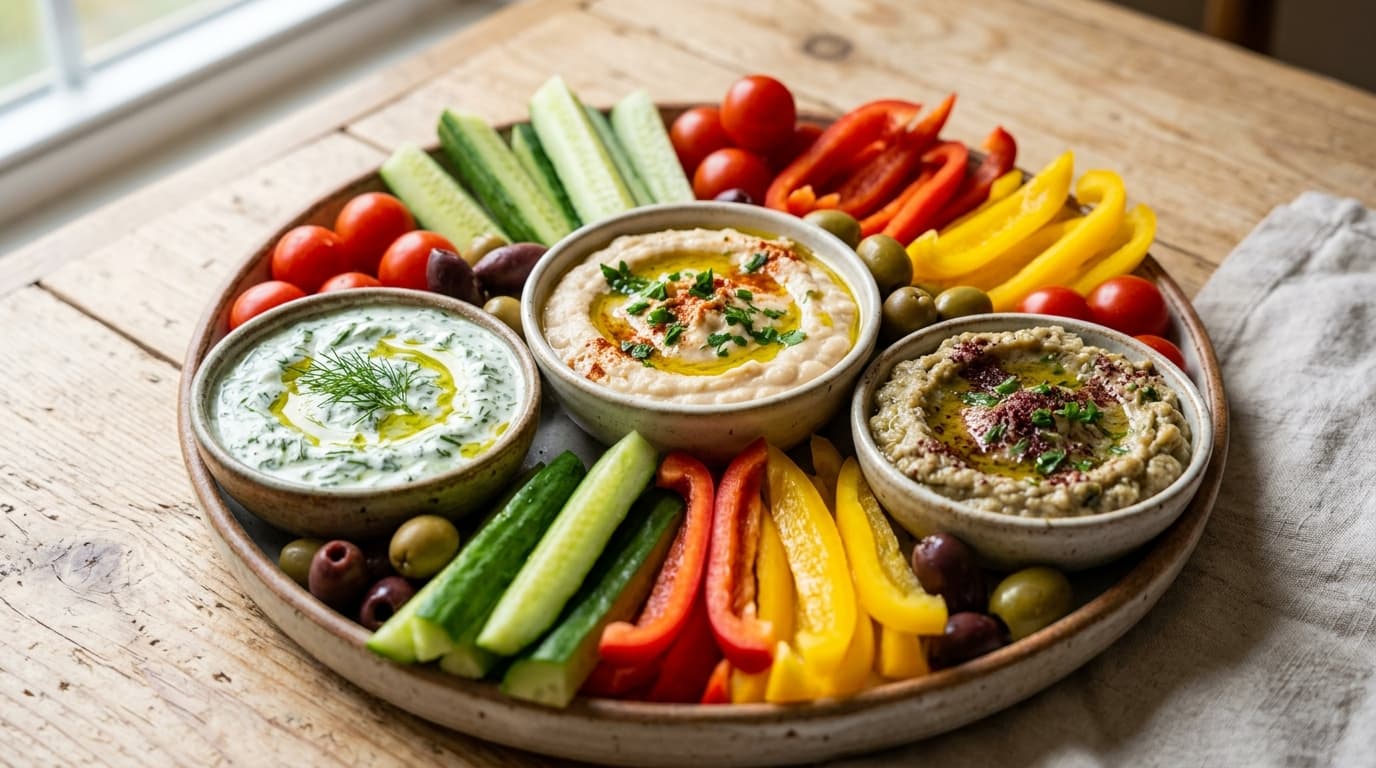
Crafting Your Low-Sulfur Mediterranean Mezze Platter
Now that you've got your delicious low-sulfur dips, let's build an entire mezze experience! A platter isn't just about the dips; it's about the beautiful array of fresh vegetables, grains, and other delightful bites.
Here's how to create a stunning, sulfur-friendly spread:
- Choose Your Dips: Pick a couple of your favorites from our low-sulfur adaptations above – perhaps the Tahini-Lemon Dip and the Creamy White Bean Dip.
- Add Colorful Vegetables: Focus on vegetables that are naturally low in sulfur and perfect for dipping. Think:
- Bell Peppers: Red, yellow, and green bell peppers are vibrant, crunchy, and a fantastic low-sulfur choice. Our Mediterranean Stuffed Peppers recipe shows just how versatile they are!
- Cucumber Sticks: Cool, refreshing, and always a crowd-pleaser.
- Carrot Sticks: Sweet and crunchy.
- Cherry Tomatoes: Halved and drizzled with a little olive oil and fresh basil, they're bursting with flavor.
- Marinated Zucchini: Thinly slice and grill zucchini, then marinate in lemon juice, olive oil, and fresh mint.
- Include Olives: All varieties of olives are low FODMAP and generally low in sulfur. Serve a mix of Kalamata and Castelvetrano for variety.
- Pair with Sulfur-Friendly Dippers:
- Gluten-free crackers or rice cakes.
- Slices of toasted sourdough bread (if tolerated).
- Cucumber rounds.
Remember, the goal is to create a spread that's not only safe for your body but also incredibly appealing to your senses. It's all about enjoying the process of making and sharing good food!
Simple Swaps for Everyday Enjoyment
Navigating a low-sulfur diet within the Mediterranean framework might seem tricky at first, but once you know the key swaps, it becomes second nature. Here are some quick ideas for your pantry and plate:
- Instead of Garlic and Onion: Reach for fresh herbs like basil, oregano, rosemary, lemon zest, or a touch of ginger. Garlic-infused olive oil is also a lifesaver!
- Swap Cruciferous Veggies: Instead of broccoli or cauliflower, enjoy zucchini, bell peppers, carrots, or green beans.
- Mindful Egg Consumption: If eggs are a trigger, limit them to perhaps one a day and focus on fish and other plant-based proteins.
- Legumes with Care: If legumes bother you, try smaller portions and always rinse them very well before cooking. White beans tend to be better tolerated by some than chickpeas.
- Cheese Alternatives: Instead of aged cheeses like Parmesan (which can be higher in sulfur due to concentrated proteins), opt for fresh mozzarella or nutritional yeast for a cheesy flavor.
- Yogurt Choices: If Greek yogurt is an issue, consider coconut yogurt as a non-dairy, fermented alternative.
These simple adjustments mean you can continue to enjoy the incredible health benefits and deliciousness of Mediterranean eating, tailored perfectly for your body's needs.
Embrace the Flavorful Journey!
I know adjusting your eating habits can sometimes feel like a big undertaking, but I truly believe that focusing on what you *can* enjoy makes all the difference. The world of low-sulfur Mediterranean dips and sauces is rich with possibilities, full of vibrant colors and incredible flavors just waiting for you to discover.
You're not just restricting; you're *expanding* your culinary horizons and learning to listen to your body in a new, empowering way. So, why not try making one of these low-sulfur dips this week? You might just find your new favorite!