Your Essential Guide to Low Oxalate Vegetables: Smart Choices for Every Meal
Navigating a low oxalate diet can feel tricky, especially when it comes to vegetables, but I've got you covered with an essential guide to making smart, delicious choices.
Your Essential Guide to Low Oxalate Vegetables: Smart Choices for Every Meal
It can feel really frustrating when you're trying to eat healthily, but then find out some of your favorite vegetables might be contributing to discomfort or health concerns. If you're managing oxalate intake, you know the struggle of looking at a vibrant salad and wondering which greens are truly your friends.
I get it; navigating dietary needs can sometimes feel like solving a complex puzzle. But don't worry, I've done a lot of digging into the world of low oxalate eating, and I'm so excited to share what I've learned about making delicious, veggie-packed meals that support your well-being. The good news is, you absolutely don't have to give up on enjoying a colorful, nutritious plate!
Understanding Oxalates: What's the Big Deal?
Let's start by demystifying oxalates a little. Oxalates, or oxalic acid, are natural compounds found in many plants, and they're actually a part of a plant's defense system. When we eat them, they can bind with minerals like calcium in our digestive tract.
For most people, this isn't a problem; oxalates are simply eliminated from the body. However, for some of us, especially those prone to kidney stones or with certain digestive conditions, a build-up of oxalate can cause issues. When oxalates and calcium bind together and crystallize in the kidneys, they can form painful kidney stones.
So, if you're working with a doctor to manage kidney stones or hyperoxaluria, you've likely been advised to keep your daily oxalate intake below certain levels. For someone at high risk, that might mean aiming for less than 50 mg a day, while others might manage well at under 100 mg, according to research on oxalate classifications.
Navigating the Vegetable Aisle: Your Low Oxalate Shopping List
This is where it gets exciting because there are so many wonderful vegetables that are naturally low in oxalates and perfect for your plate! The key is to understand which ones fall into the 'safe' category, meaning they typically have less than 10 mg of oxalate per serving.
Your Go-To Low Oxalate Vegetable Stars:
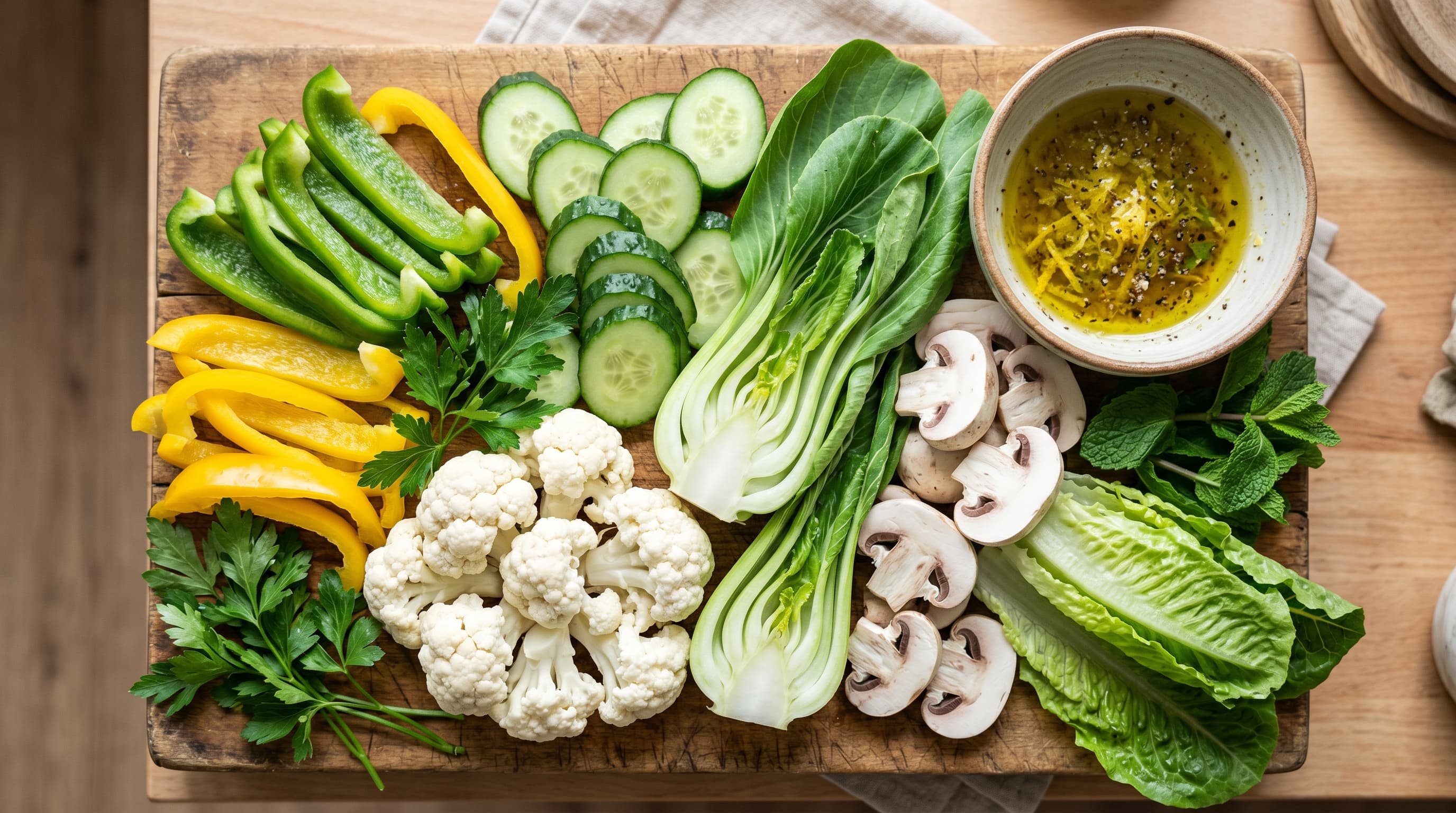
These are the veggies you can generally enjoy without much worry about oxalate content:
- Arugula: A peppery green that's fantastic in salads or lightly sautéed.
- Avocado: Creamy, versatile, and a great source of healthy fats.
- Bok Choy: This mild-flavored cruciferous veggie is lovely in stir-fries or soups. Our Low Oxalate Chicken Wedding Soup uses it beautifully!
- Cabbage: Green, red, napa – all great for slaws, stir-fries, or adding crunch.
- Cauliflower: Super versatile! You can rice it, roast it, or mash it. I love it in our Low-Oxalate Cauliflower Tabbouleh Bowls.
- Cucumbers: Refreshing and perfect for salads or snacks.
- Endive: A slightly bitter green that adds a sophisticated touch to salads.
- Iceberg Lettuce: While not the most nutrient-dense, it's very low in oxalates.
- Mushrooms: Most varieties, like cremini, button, or shiitake, are low oxalate.
- Onions: All types – red, white, yellow – are low oxalate and add so much flavor.
- Radishes: A spicy crunch for salads or roasted.
- Romaine Lettuce: A great base for salads, offering more nutrients than iceberg.
- Zucchini: Wonderful grilled, roasted, or spiralized into 'zoodles.'
- Green Bell Peppers: Crisp and vibrant, perfect for adding color and flavor.
- Yellow Bell Peppers: Sweet and sunny, another great low-oxalate choice.
- Orange Bell Peppers: Just like their green and yellow cousins, they're a safe bet.
Moderate Oxalate Choices: Enjoy in Moderation
Some vegetables have a bit more oxalate (between 10-49 mg per serving) but can still be part of your diet in smaller, controlled portions. The key here is mindful portion control, maybe one or two servings a day.
- Asparagus: About 4 spears are around 15 mg.
- Broccoli: A 1/2 cup has 10-14 mg.
- Brussels Sprouts: A 1/2 cup is about 18 mg.
- Carrots (raw): One medium carrot is around 10 mg.
- Celery (raw): One stalk is about 11 mg.
- Corn (cooked): A 1/2 cup is around 12 mg.
- Eggplant: A 1/2 cup is about 12 mg.
- Green Beans: A 1/2 cup is about 15 mg.
- Tomatoes (raw): One medium tomato is around 10 mg.
It's all about balance and how these fit into your overall daily oxalate goal.
Veggies to Be Mindful Of (Higher Oxalate)
And then there are those vegetables that are quite high in oxalates (50 mg or more per serving) and are often best avoided or severely limited on a low oxalate diet. These include:
- Spinach: Cooked spinach can have hundreds of milligrams in just 1/2 cup.
- Beet Greens: Very high, often over 900 mg per 1/2 cup.
- Swiss Chard: Similar to beet greens, quite high.
- Rhubarb: Also very high in oxalates.
- Beets: Even the root vegetable is fairly high, around 76-152 mg per 1/2 cup.
- Sweet Potatoes (with skin): A medium baked sweet potato can be around 97 mg.
- Potatoes (with skin): Similar to sweet potatoes, around 97 mg for a medium one.
Knowing these distinctions can really help you make informed choices without feeling overwhelmed.
Smart Cooking for Lower Oxalates
Did you know that how you prepare your vegetables can actually change their oxalate content? It's true! Some cooking methods can help reduce the amount of soluble oxalates in certain foods.
Boiling is generally the most effective method for this. When you boil oxalate-rich vegetables and then discard the cooking water, you can reduce their soluble oxalate content by a significant amount – sometimes 30-80%! This is because oxalates leach out into the water. While steaming and baking are fantastic for preserving nutrients, they aren't as effective at reducing oxalates.
Of course, boiling can also reduce other water-soluble nutrients like some B vitamins and Vitamin C, so it's a trade-off we consider. For those truly needing to limit oxalates, though, it can be a really helpful strategy.
Pairing for Power: Calcium & Low Oxalate Veggies
Here's a clever little trick: calcium can be your friend in managing oxalates! When you eat calcium-rich foods alongside foods that contain oxalates, the calcium can bind with the oxalates in your digestive tract *before* they get absorbed into your body. This helps prevent them from forming crystals in your kidneys.
So, think about adding a sprinkle of cheese to a moderate-oxalate dish, or enjoying a glass of milk or a calcium-fortified plant milk with your meal. This strategy is particularly helpful if you're including some of those moderate oxalate vegetables in your diet.
It's important to remember that while spinach is high in calcium, it's also *very* high in oxalates. So, even though it looks like a calcium powerhouse, your body actually absorbs very little of that calcium because the oxalates bind to it, creating what some call the "spinach paradox." This is why focusing on truly low oxalate calcium sources and pairings is so important!
Bringing it All Together: Easy Meal Ideas with Low Oxalate Vegetables
Now for the fun part – putting these incredible low oxalate vegetables to good use in your kitchen! You'll be amazed at how much variety and flavor you can still enjoy. Let me show you a few ideas, including some from our GentleFeast kitchen:
- Refreshing Salads: Start with a base of romaine or iceberg lettuce, then pile on chopped cucumbers, radishes, bell peppers (any color!), and maybe some avocado. A light lemon-olive oil dressing ties it all together beautifully.
- Hearty Soups: Our Low Oxalate Chicken Wedding Soup is a perfect example! It features tender chicken meatballs with a delicious medley of low-oxalate vegetables like cabbage, white onion, green bell pepper, and bok choy in a savory broth. It's so comforting and gentle on your system.
- Creative Bowls: You absolutely have to try our Low-Oxalate Cauliflower Tabbouleh Bowls. This dish uses riced cauliflower as the base, mixed with fresh parsley, mint, white onion, and bell peppers. It's a fantastic, flavorful take on a classic, showing just how versatile cauliflower can be.
- Stir-Fries and Sautéed Dishes: Combine sliced bok choy, mushrooms, bell peppers, and onions with your favorite protein. A little garlic and ginger (both low oxalate!) can add incredible depth of flavor.
- Roasted Veggie Medleys: Toss cauliflower florets, zucchini chunks, and bell pepper strips with a little olive oil, thyme, and rosemary (these herbs also have anti-inflammatory properties, according to research on spices!) and roast until tender and slightly caramelized.
You see? There's a whole world of deliciousness waiting for you. Eating low oxalate doesn't mean eating boring!
Your Kitchen, Your Control: Practical Tips for Everyday Eating
Embarking on a low oxalate journey can feel like a big change, but it's really about making small, sustainable shifts. Here are a few practical tips to help you feel confident and in control:
- Focus on What You *Can* Eat: Instead of dwelling on the foods you're limiting, celebrate the abundance of delicious, low oxalate options available to you. Your plate can still be vibrant and full!
- Portion Power: For those moderate oxalate vegetables, remember that portion control is your friend. A small serving here and there can often fit within your daily goals.
- Hydrate, Hydrate, Hydrate: Drinking plenty of water is always a good idea, especially if you're managing kidney stone risk. It helps flush things through your system.
- Read Labels: Oxalates can sneak into unexpected places, especially in processed foods or certain flours. Getting familiar with ingredients can be really empowering.
- Talk to Your Doctor or Dietitian: Every body is unique! What works for one person might need tweaking for another. Always check in with a healthcare professional to tailor advice to your specific needs.
Remember, this isn't about perfection; it's about progress and feeling better in your body. You're doing an amazing job taking charge of your health, and I'm here to cheer you on every step of the way. Why not try incorporating one new low oxalate vegetable into your next meal this week? You've got this!